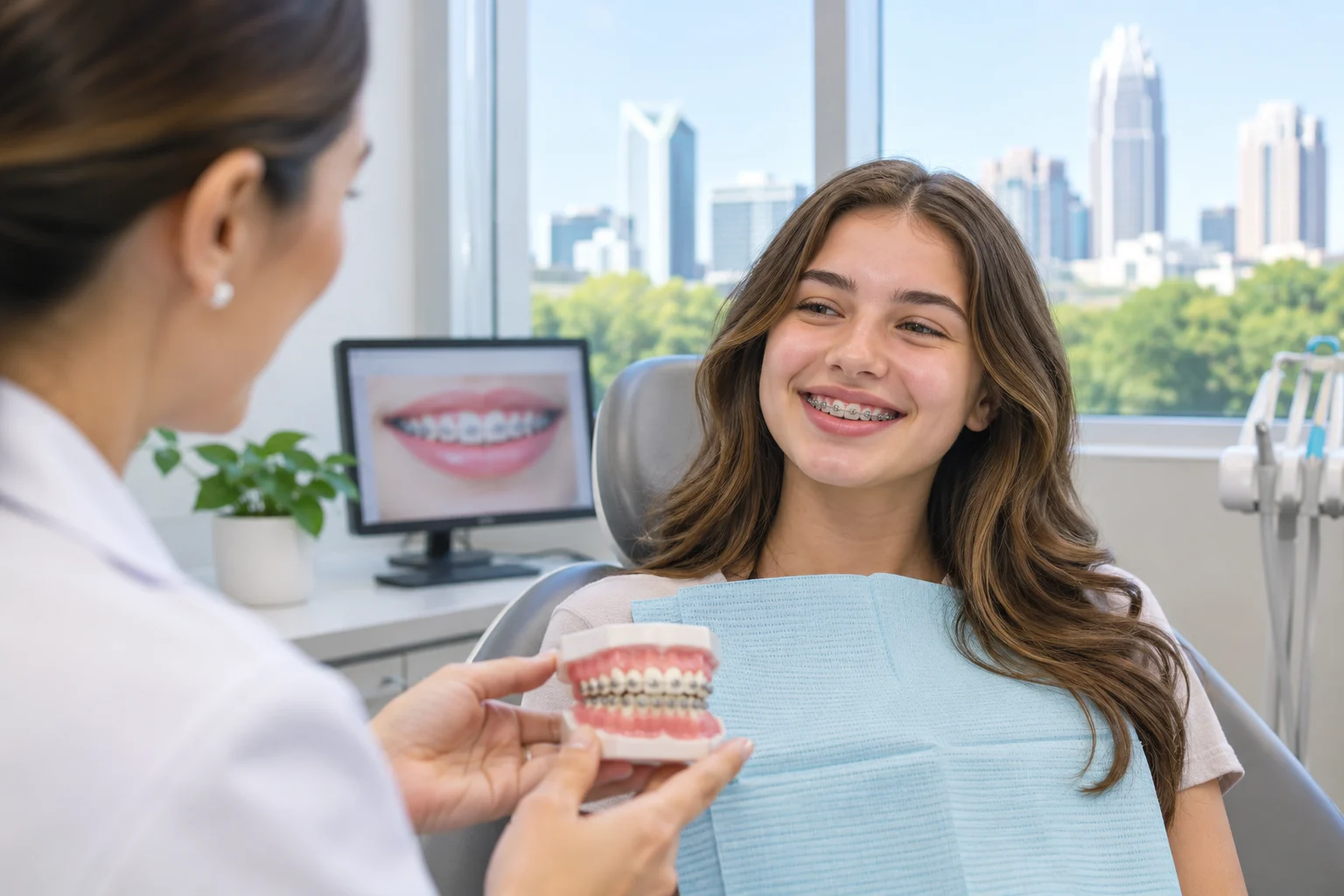
Explore the cost of braces in Charlotte, including average pricing, factors that influence costs, insurance coverage, financing options, and questions to ask before starting treatment.
If you are researching how much braces cost in Charlotte, NC, you are probably looking for more than a single number. You want to know what you may actually pay, what can make the price go up or down, whether dental insurance can help, and whether there are ways to make monthly payments easier to manage.
The cost of braces can vary considerably from one patient to another. The American Association of Orthodontists (AAO) notes that factors such as treatment complexity, treatment duration, location, and the orthodontic practice can affect the overall fee.
Traditional braces in Charlotte are generally priced at approximately $3,000 to $7,500. This is a general market range rather than a quote for an individual patient, and actual fees can differ based on the treatment plan and coverage available.
So, how much do braces cost in Charlotte, NC? The most accurate answer comes after an orthodontic evaluation and a discussion of your treatment needs.
When you research braces prices online, you may see a wide range of figures. Traditional braces in Charlotte typically fall between about $3,000 and $7,500.
That range is broad for a reason. Orthodontic treatment is not priced solely according to the type of braces placed on the teeth. Your individual treatment plan matters.
For example, someone with relatively straightforward alignment concerns may have different treatment requirements from someone who needs more extensive correction involving tooth position and bite relationships.
Treatment duration can also affect the overall fee. The AAO states that most people wear braces for approximately 12 to 24 months, although treatment time varies depending on the individual case.
Because of these differences, an online average should be viewed as a starting point rather than a personal estimate.
Several factors can influence the cost of braces.
Traditional metal braces are one of the most common orthodontic options. Other options, such as ceramic clear braces, may have different fees depending on the materials, design, and treatment plan.
If you are comparing braces with clear aligners, ask about the total treatment cost rather than looking only at the initial appliance price. You can also read more about the cost of clear aligners in Charlotte to see how the two compare.
The amount and type of tooth movement required can influence the overall fee.
Crowding, spacing, bite concerns, and other alignment issues may require different treatment approaches. Your orthodontist can assess these factors before developing an individualized plan.
The duration of your orthodontic treatment can also play a role in the total cost.
Some patients may need treatment for a shorter period, while others may require a longer course of care. The AAO notes that treatment length varies according to the individual and the bite problem being addressed.
Two people living in the same city can receive different treatment plans and different fees.
That is why searching for braces prices in Charlotte can give you useful background information, but it cannot tell you exactly what your own treatment will cost.
Dental insurance may help reduce your out-of-pocket cost, but coverage varies considerably between plans.
Some dental insurance plans include orthodontic benefits, while others do not. Coverage may also have age restrictions, lifetime maximums, waiting periods, or other limitations.
The AAO recommends checking directly with your insurance provider to understand your specific orthodontic benefits.
Before starting treatment, ask:
Understanding these details can make the cost of braces easier to plan for.
Paying the entire cost of braces upfront is not the only arrangement available at many orthodontic practices.
Payment plans may allow patients to make an initial payment and then pay the remaining balance in installments. The specific terms vary by practice, and you can review the payment options available at Sacksteder Orthodontics before your visit.
The AAO notes that many orthodontists offer payment plans, and some practices provide in-house financing options.
If you are concerned about the cost, ask the orthodontic office about available payment arrangements before treatment begins.
It is also worth asking whether there are separate fees for consultations, diagnostic records, retainers, repairs, or other parts of treatment. Knowing what is included in the quoted fee can help you understand the overall financial commitment.
If you have a Health Savings Account or Flexible Spending Account, you may be able to use eligible funds toward orthodontic treatment.
The AAO states that HSAs and FSAs can be used for eligible orthodontic expenses, subject to the applicable rules for each type of account.
Because account rules and eligibility can vary, check with your plan administrator or benefits provider before using these funds.
For families planning orthodontic treatment, looking at insurance benefits and available tax-advantaged healthcare accounts in advance may help with budgeting.
Adults can receive orthodontic treatment, and age by itself does not determine whether someone is a candidate for braces.
However, an adult orthodontics treatment plan can differ from a child's or teenager's plan depending on dental history, existing restorations, tooth movement needs, and other individual factors.
The AAO notes that orthodontic treatment costs vary based on the case, region, and orthodontist rather than having one universal price for adults.
If you are an adult researching braces costs, the most useful step is to schedule an evaluation and ask for a personalized treatment estimate.
When comparing the cost of braces, do not look only at the starting price.
Ask what is included in the total treatment fee. Depending on the orthodontic practice and treatment arrangement, the fee may cover different parts of care. You may want to ask whether the quoted price includes:
The exact inclusions can vary, so it is reasonable to ask for a clear explanation of the treatment fee before starting.
This can help you compare orthodontic treatment costs more accurately and avoid focusing on a lower initial figure that does not include the same services.
A little preparation can make the financial side of orthodontic treatment easier to understand.
Start by checking your dental insurance benefits. If orthodontic treatment is covered, find out the maximum benefit and any age or plan restrictions.
Next, ask the orthodontic office for a detailed estimate based on your treatment plan. Ask about payment plans and what is included in the fee.
If you have an HSA or FSA, check whether you can use eligible funds for orthodontic expenses.
Most importantly, do not choose an orthodontic treatment based only on the lowest advertised price. The appropriate treatment plan depends on your individual orthodontic needs, and the total cost should be considered alongside the care and services included.
Bring your questions to your orthodontic consultation. Useful questions include:
Having these answers in front of you can give you a clearer picture of the financial side of your orthodontic treatment.
If you are searching for how much braces cost in Charlotte, NC, an individualized consultation is the best way to move beyond general price ranges.
At Sacksteder Orthodontics, you can discuss your orthodontic concerns, treatment options, expected treatment needs, and financial questions with the team. A complimentary consultation can help you understand what may be involved in your treatment and what questions to ask about the total cost of braces.
Contact Sacksteder Orthodontics to schedule a consultation and learn more about your orthodontic treatment options in Matthews and the Charlotte area.
How much do braces cost in Charlotte, NC?
Traditional braces in Charlotte are generally priced at approximately $3,000 to $7,500. This is a general range, not a personalized quote. The actual cost can vary based on treatment complexity, duration, type of braces, insurance coverage, and the orthodontic practice.
Does insurance cover the cost of braces?
Some dental insurance plans include orthodontic benefits, but coverage varies. Your plan may have age restrictions, a lifetime maximum, waiting periods, or other conditions. Before beginning orthodontic treatment, contact your insurance provider to confirm your benefits and ask the orthodontic office how insurance may be applied to your treatment fee.
Can I pay for braces monthly?
Many orthodontic practices offer payment plans that allow patients to spread the cost of braces over time. The down payment, monthly amount, duration, and financing terms vary by office. If you are concerned about paying the full treatment fee upfront, ask about available payment options during your consultation. The AAO notes that many orthodontists provide payment plans for orthodontic care.
Are braces more expensive for adults?
Not necessarily. The cost of braces depends on factors such as the complexity of the orthodontic problem, treatment duration, treatment approach, and individual practice fees. Adults may have different treatment considerations based on their dental history and orthodontic needs. An orthodontic evaluation can help determine the treatment approach and provide a more specific cost estimate.
Does the cost of braces include retainers?
It depends on the orthodontic practice and treatment agreement. Some offices may include retainers in the overall treatment fee, while others may charge separately. Because retainers are part of the post-treatment phase, ask whether they are included when discussing cost. Sacksteder Orthodontics can explain what is included in your specific treatment plan and answer questions about the financial details of orthodontic care.
Does the type of braces affect the price?
It can. Different types of braces may involve different materials and treatment approaches, which can affect the overall fee. However, the appliance itself is only one factor. Treatment complexity, duration, and your individual orthodontic needs can also influence pricing. Your orthodontist can explain why a particular type of braces may be recommended and how it affects the overall treatment cost.
Can I use an HSA or FSA to pay for braces?
Eligible orthodontic expenses may be paid using HSA or FSA funds, depending on the account rules and your individual circumstances. The AAO states that these accounts can generally be used for eligible orthodontic expenses. Check with your plan administrator before using HSA or FSA funds toward orthodontic treatment.
Why does the cost of braces vary so much?
Every orthodontic case is different. The amount of tooth movement required, bite concerns, treatment complexity, treatment duration, type of appliance, location, insurance coverage, and individual practice fees can all influence the final cost. The AAO notes that there is no single price for orthodontic treatment because costs vary by patient and practice. A consultation provides a more useful estimate than a general online price range.
How long do braces usually stay on?
Treatment time varies depending on the individual case. The AAO states that most people have braces for approximately 12 to 24 months, although some patients may need shorter or longer treatment. Your treatment duration can affect the overall cost, so ask your orthodontist about the factors that may influence your expected timeline.
How can I find out exactly how much my braces will cost?
The most reliable way is to schedule an orthodontic consultation. Your orthodontist can evaluate your teeth and bite, discuss the recommended treatment approach, and provide information about the associated fees. You can also ask about insurance benefits, payment plans, retainers, and any additional costs. Contact Sacksteder Orthodontics to schedule a consultation and discuss your orthodontic treatment and payment questions.
Call to book a consultation or send us a message.


