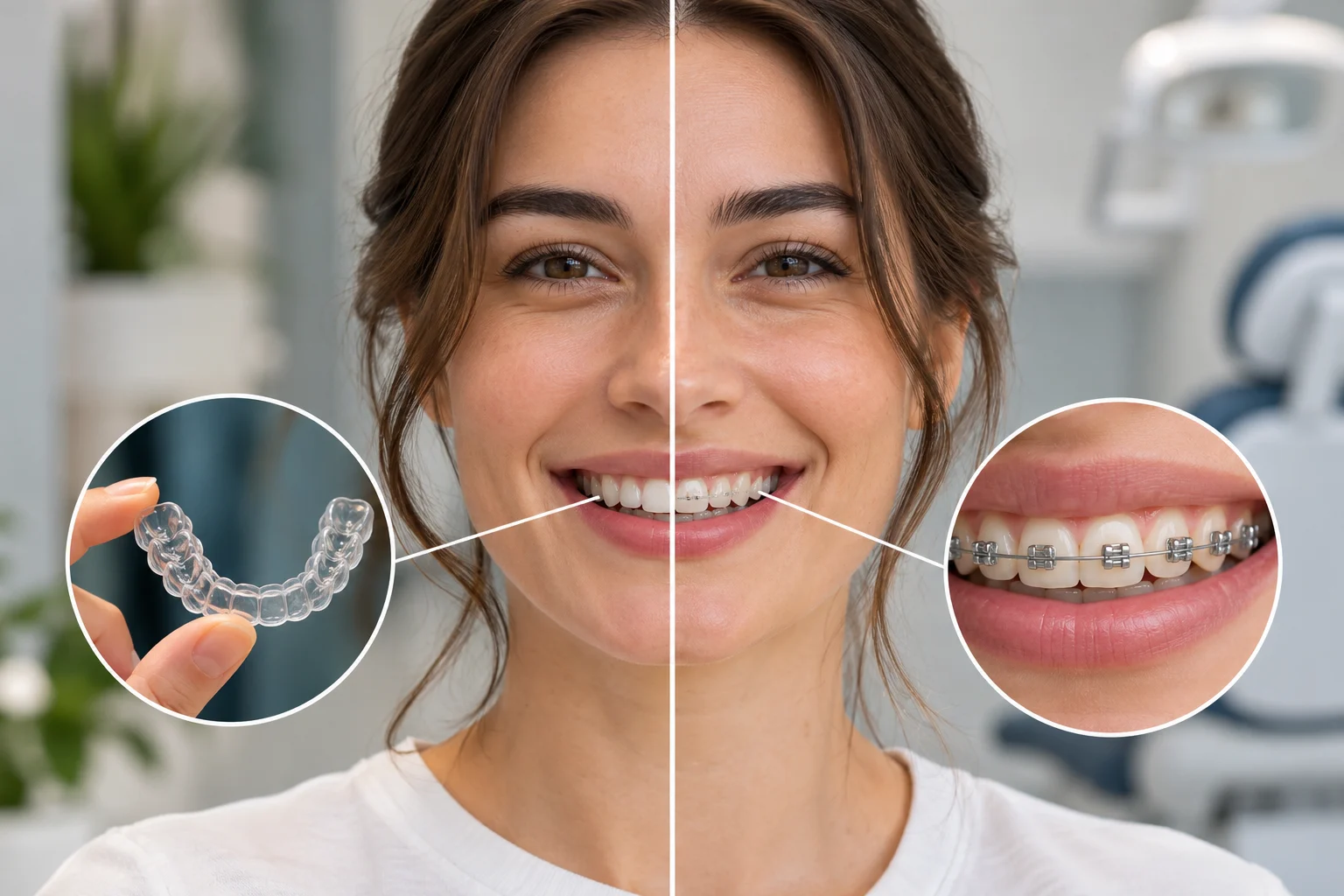
Understand how clear aligners compare with braces, including how each treatment works, their benefits, key differences, and factors to consider when choosing.
When you start looking into orthodontic treatment, you will probably come across two familiar options: clear aligners and braces.
Both are designed to gradually move teeth into more desirable positions, but they fit into daily life differently. Clear aligners are removable and made from transparent plastic, while braces use brackets and wires that remain attached to the teeth during treatment.
That difference alone can make the decision feel fairly straightforward. In reality, there is more to consider.
Your bite, tooth position, treatment goals, oral health, lifestyle, and ability to follow treatment instructions can all influence which option may be suitable for you. What works well for one person may not be the right approach for someone else. If you are not sure whether you need treatment at all, these signs you may need orthodontic treatment are a helpful place to start.
If you are searching for clear aligners vs. braces, understanding the differences can help you know what to discuss with your orthodontist.
Both clear aligners and braces use controlled pressure to gradually guide teeth toward planned positions.
Traditional braces use small brackets attached to the teeth and connected by orthodontic wires. During treatment, the orthodontist monitors tooth movement and makes adjustments as needed. Other orthodontic components may sometimes be used, depending on the individual's bite and treatment requirements.
Clear aligners use a series of custom-made trays. Each tray is designed to place gentle, controlled pressure on specific teeth. As treatment progresses, the patient moves through the prescribed series of aligners.
The basic purpose is similar, but the way each appliance is worn and managed is quite different.
This is one of the main things to think about when comparing clear aligners vs. braces. The appliance becomes part of your everyday routine for the duration of treatment.
The most noticeable difference is how each appliance fits into your day.
Clear aligners:
Braces:
When deciding between clear aligners vs. braces, think about which routine feels more realistic for you.
Comfort varies from person to person.
With clear aligners, you may notice pressure or mild soreness when you begin wearing a new tray. This can occur as the aligner applies pressure to guide teeth according to the treatment plan.
Braces can also cause temporary tenderness, particularly after adjustments. The brackets and wires may take some time to get used to, and some patients may experience irritation on the inside of the cheeks or lips.
Neither orthodontic treatment is completely free from an adjustment period. Your experience can depend on your treatment plan, the amount of tooth movement required, and your individual sensitivity.
If comfort is a concern, bring it up during your consultation. Your orthodontist can explain what you may experience with the recommended treatment approach.
Good oral hygiene is important with any orthodontic treatment.
One practical benefit of clear aligners is that you can remove the trays while brushing and flossing. This allows you to reach your teeth without cleaning around brackets and wires.
Braces require a little more attention. Food particles and plaque can collect around brackets, wires, and other components, so careful brushing is important. Your orthodontic team may recommend specific techniques or cleaning aids to make the process easier.
Clear aligners also need to be cleaned according to your orthodontist's instructions. Wearing trays over unclean teeth, or not caring for the aligners properly, can affect your oral hygiene. It also helps to know whether you should brush after eating when wearing aligners before putting the trays back in.
Whether you choose clear aligners or braces, keeping your teeth and gums clean throughout treatment should remain part of your daily routine.
Food is another practical consideration when comparing clear aligners vs. braces.
With clear aligners, the trays are generally removed before meals. This means you can usually eat without working around brackets and wires. After eating, clean your teeth as instructed before putting the aligners back in.
Braces remain attached while you eat. Certain hard, sticky, chewy, or crunchy foods may need to be avoided because they can damage brackets or wires.
For someone who does not want to change their usual eating habits, the removable nature of clear aligners may be appealing. However, removable trays also require responsibility. You need to remember to put them back in and follow the wear instructions provided by your orthodontist.
Your daily routine deserves a place in the clear aligners vs. braces discussion.
If you attend frequent meetings, perform on stage, play sports, or simply prefer a less noticeable orthodontic appliance, you may appreciate the appearance of clear aligners. Some people also like being able to remove their aligners during meals and oral hygiene.
Braces, on the other hand, remain in place throughout treatment. You do not need to remember to put them back in after eating or cleaning your teeth. That can be useful for people who would rather not manage removable trays.
There is also a behavioral aspect to consider. Clear aligners require consistent wear according to your orthodontist's instructions. If trays are frequently left out, treatment may not progress as planned.
The best fit for your lifestyle depends on your habits as much as your preferences.
Not necessarily.
Clear aligners can be used for many orthodontic concerns, including certain cases involving crowded, spaced, or misaligned teeth. If you are curious how they work on crooked teeth specifically, you can read whether clear aligners straighten your teeth. However, not every orthodontic problem can be treated in the same way.
The type and extent of tooth movement needed, your bite, and other individual factors can influence whether aligners are an appropriate option.
Braces may be recommended when specific tooth movements or a different level of control is needed.
This does not mean one option is universally better than the other. It means your orthodontic needs should be assessed before deciding.
If you are unsure whether clear aligners or braces would be appropriate for your teeth, an orthodontic evaluation is a useful place to start.
There is no single treatment timeline that applies to every patient.
The length of orthodontic treatment can depend on factors such as the amount of tooth movement required, the complexity of the bite, the chosen treatment approach, and how closely treatment instructions are followed.
Some cases may require a shorter period of treatment, while others may take longer.
For clear aligners, consistent wear is particularly important because the trays are removable. With braces, the appliance remains attached, but keeping scheduled appointments and following your orthodontist's instructions still matters.
If treatment time is a major concern, ask your orthodontist how your individual case may affect the expected timeline rather than relying on general estimates.
Choosing an orthodontic treatment is about more than appearance. Consider:
It can also help to ask practical questions during your consultation. How often will appointments be needed? How should the appliance be cleaned? What should you do if something breaks or an aligner is lost? Are there foods or habits you should avoid? If this is your first visit, it may help to know what to expect at your first orthodontist appointment.
These details can give you a clearer picture of what everyday life with clear aligners vs. braces may look like.
If you are still deciding between clear aligners and braces, an orthodontic consultation can help you understand your options.
At Sacksteder Orthodontics in Matthews, NC, you can discuss your orthodontic concerns, treatment goals, and preferences with the team. An evaluation can help determine which orthodontic treatment options may be appropriate based on your individual needs.
Whether you are interested in clear aligners, braces, or simply want to understand the differences before making a decision, a complimentary consultation gives you an opportunity to ask questions and learn more about your treatment options.
Contact Sacksteder Orthodontics to schedule your orthodontic consultation.
Are clear aligners as effective as braces?
Clear aligners can be used to address many orthodontic concerns, but their suitability depends on the type and complexity of tooth movement required. Braces may be recommended for certain cases where a different approach is needed. An orthodontist can evaluate your teeth and bite and explain whether clear aligners are an appropriate option for your orthodontic treatment.
Are clear aligners less noticeable than braces?
Yes. Clear aligners are made from transparent material, so they are generally less noticeable than traditional braces. They may still be visible, particularly at close range. If appearance is important to you, ask your orthodontist how clear aligners vs. braces may differ based on the treatment recommended for your individual case.
Can I eat whatever I want with clear aligners?
Clear aligners are generally removed before eating, which means you do not have to eat around brackets and wires. Your orthodontist will provide instructions about when to remove your trays and how to care for them. Maintaining good oral hygiene after meals is also important during orthodontic treatment.
Do braces hurt more than clear aligners?
Both clear aligners and braces can cause temporary pressure or soreness as teeth move. Braces may also cause irritation from brackets or wires, particularly while you are getting used to them. Clear aligners may feel tight when you begin a new tray. Your orthodontist can discuss what you may experience with your recommended orthodontic treatment.
Can clear aligners fix crooked teeth?
Clear aligners may be suitable for some cases involving crooked or crowded teeth. However, the appropriate treatment depends on the type and extent of misalignment. An orthodontic evaluation is needed to determine whether clear aligners can address your concerns or whether braces or another orthodontic treatment may be more appropriate.
Are braces faster than clear aligners?
Treatment time varies from one person to another. The duration of orthodontic treatment depends on factors such as the type of tooth movement required, bite concerns, treatment complexity, and following your orthodontist's instructions. It is best to ask about your expected treatment timeline rather than assuming that braces or clear aligners will be faster.
Can adults get clear aligners or braces?
Yes. Adults may be candidates for both clear aligners and braces, and adult orthodontics is a common reason patients visit an orthodontist. Age alone does not determine which orthodontic treatment is appropriate. Your orthodontist can assess your teeth, bite, oral health, and treatment goals before discussing the options that may be suitable for you.
Do I have to wear clear aligners all day?
Clear aligners should be worn according to the schedule provided by your orthodontist. They are generally removed for eating and oral hygiene, as directed. Consistent wear is an important part of aligner treatment. Your orthodontist will explain how long you should wear your trays each day and when they should be removed.
Which is easier to clean, clear aligners or braces?
Clear aligners can be removed while brushing and flossing, which can make access to the teeth more straightforward. Braces require careful cleaning around brackets and wires. Whichever option you choose, daily brushing, flossing, and routine dental care remain important.
How do I choose between clear aligners and braces?
Start with an orthodontic evaluation. Your orthodontist can assess your teeth and bite, discuss your treatment goals, and explain whether clear aligners, braces, or another approach may be appropriate. Consider your orthodontic needs, lifestyle, oral hygiene routine, appearance preferences, and ability to follow treatment instructions.
Call to book a consultation or send us a message.


